
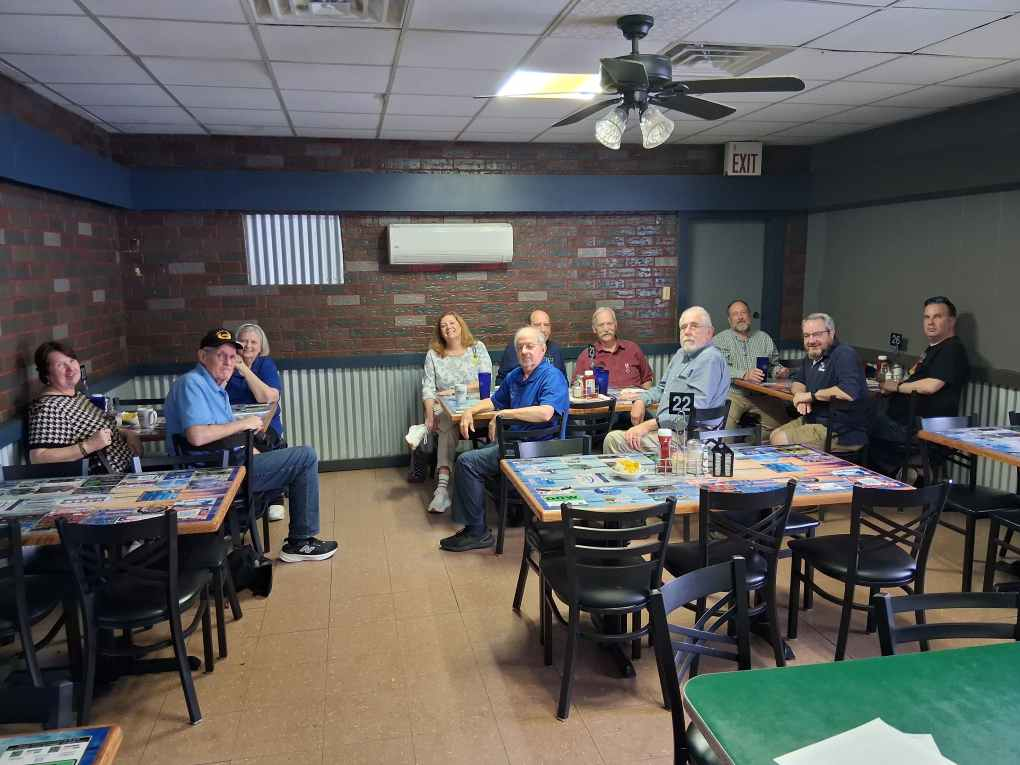
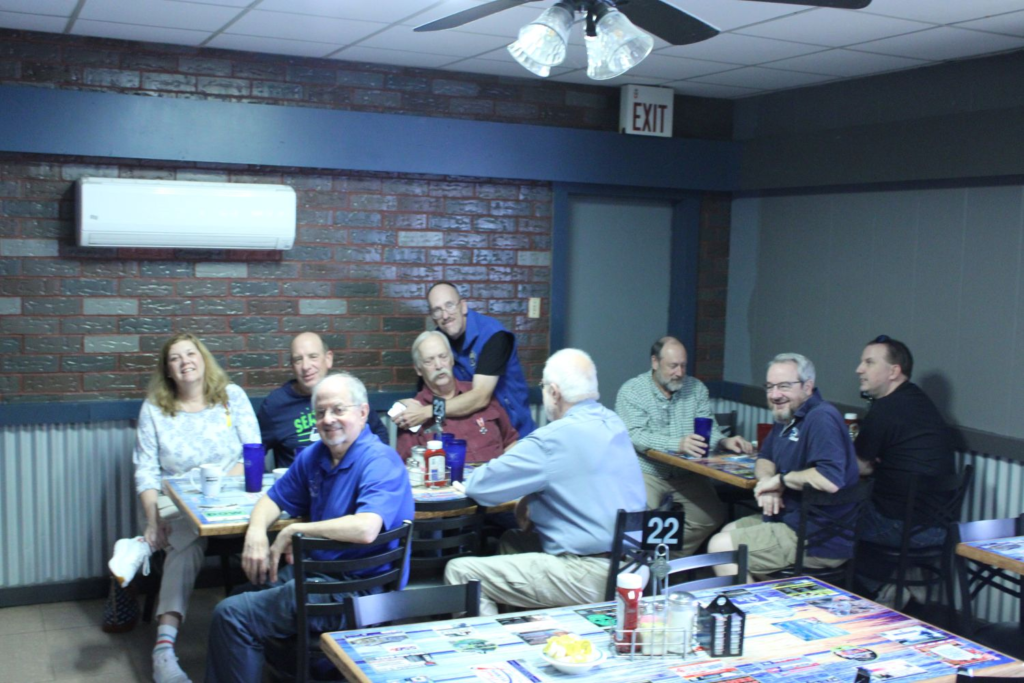
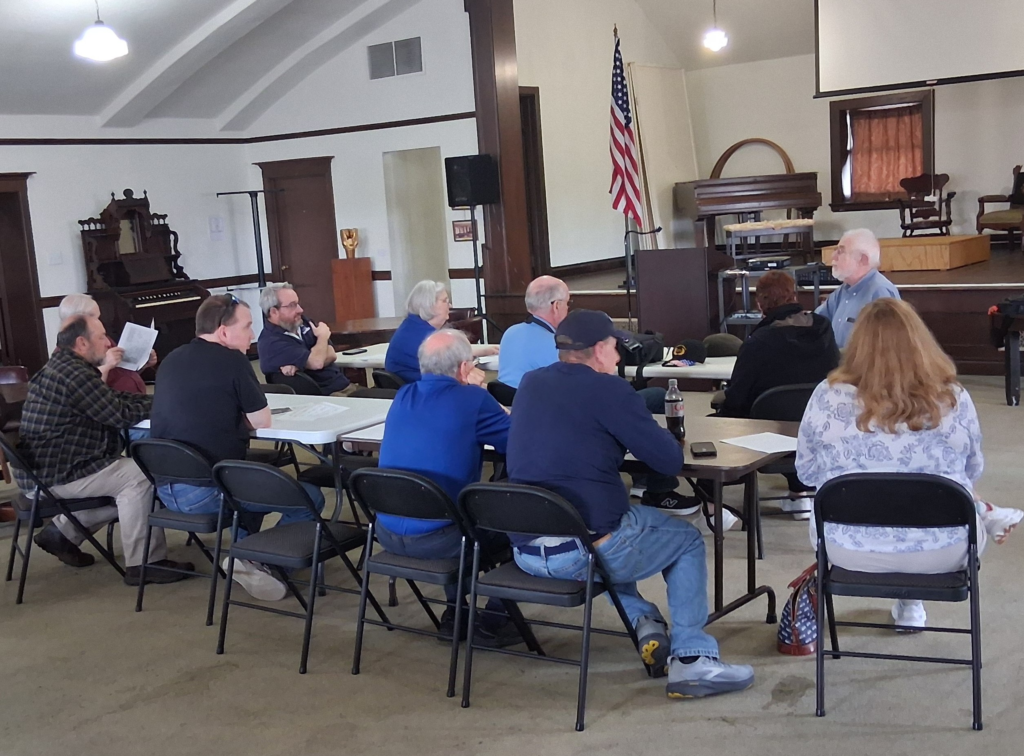
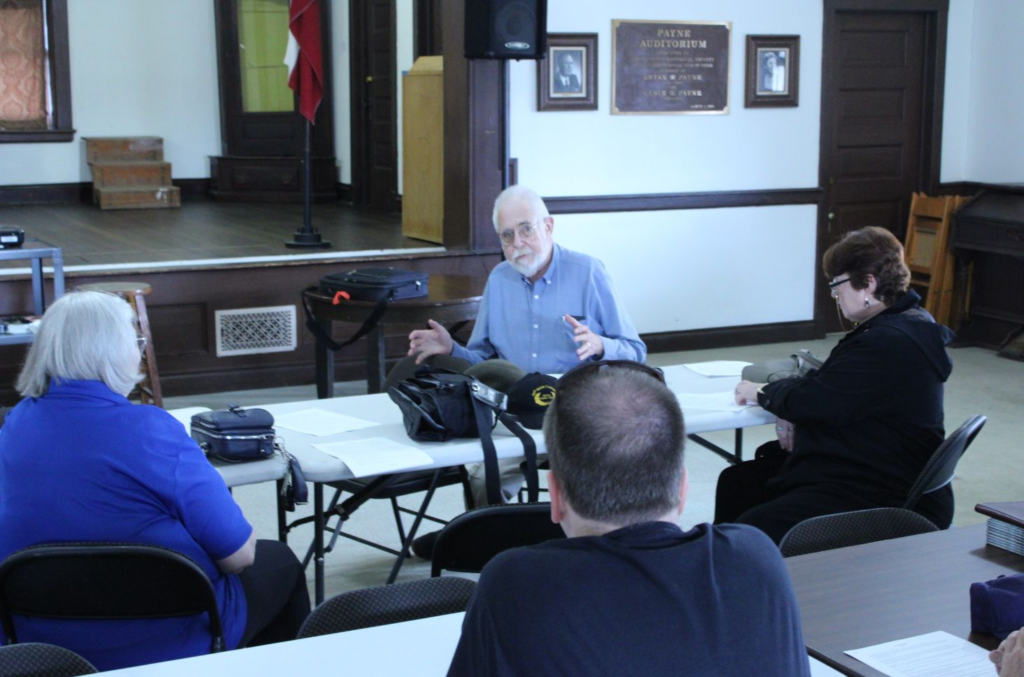
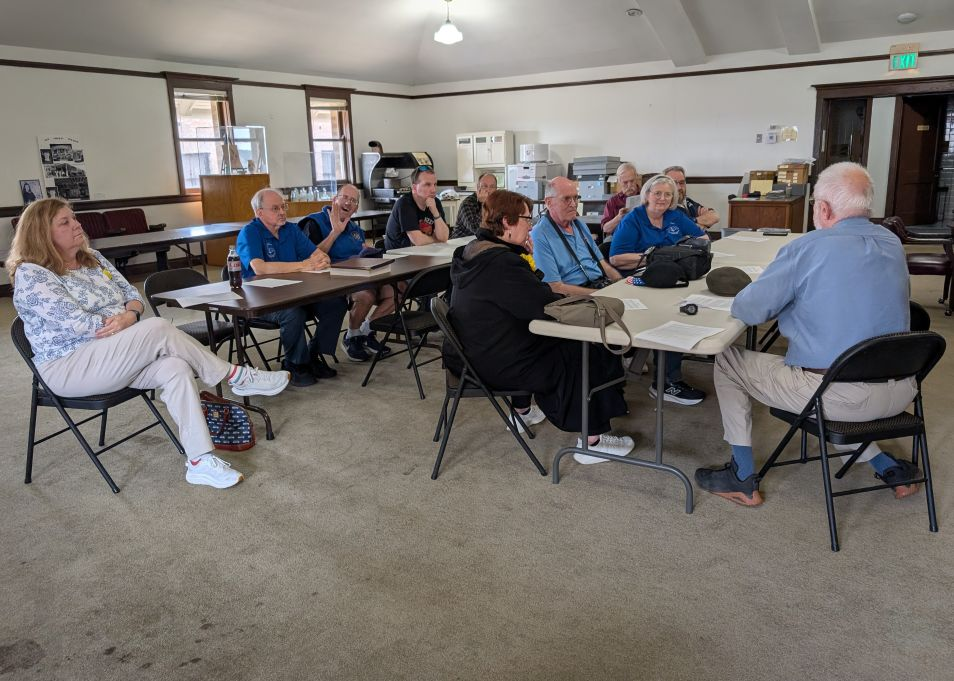
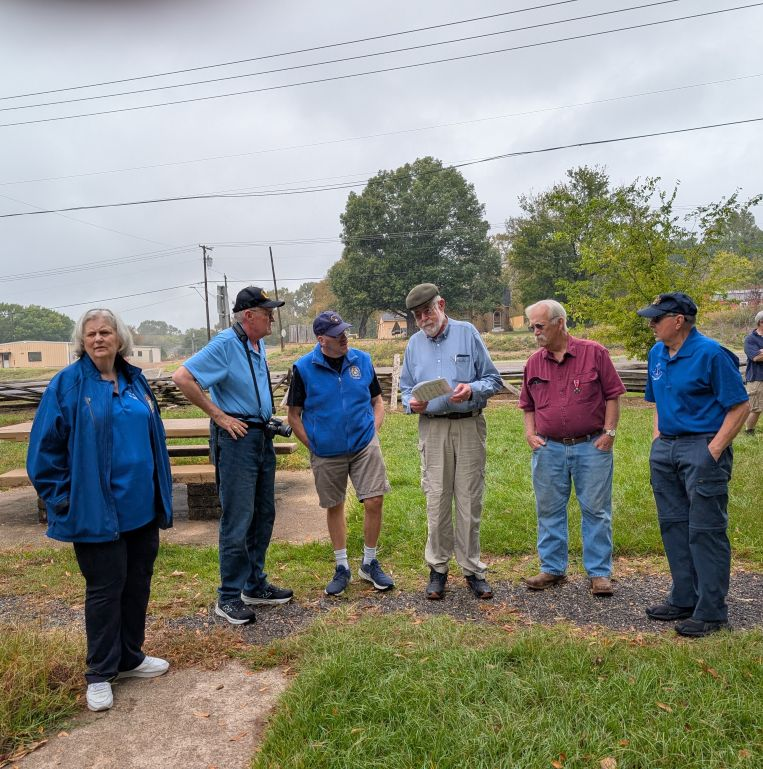
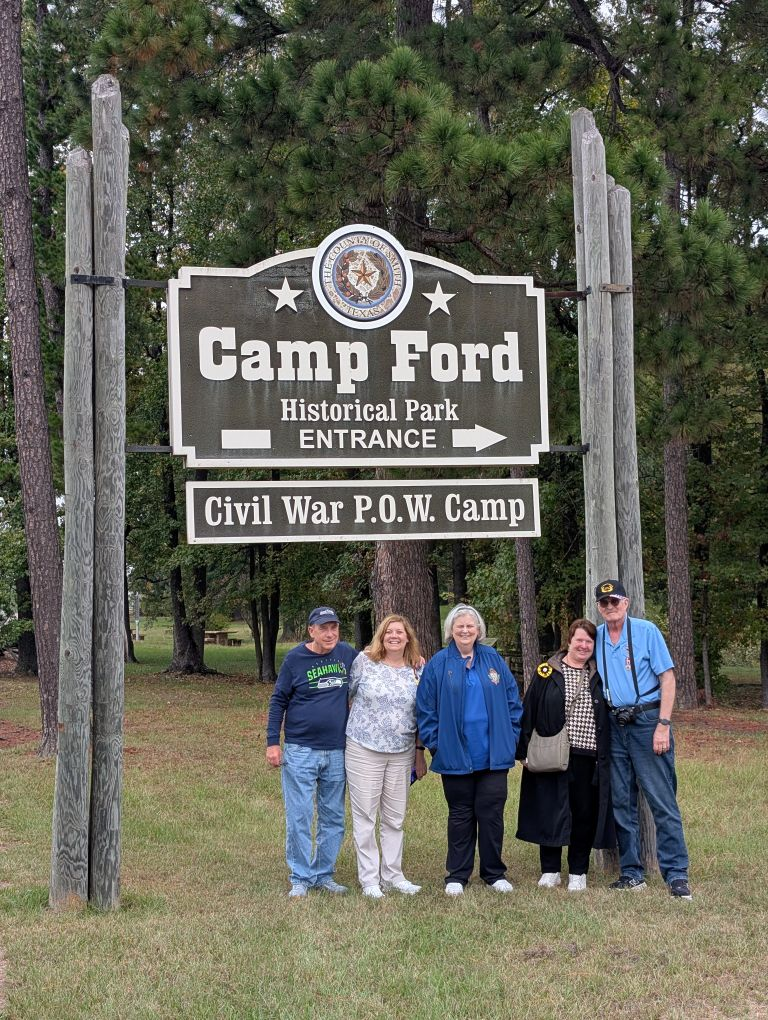
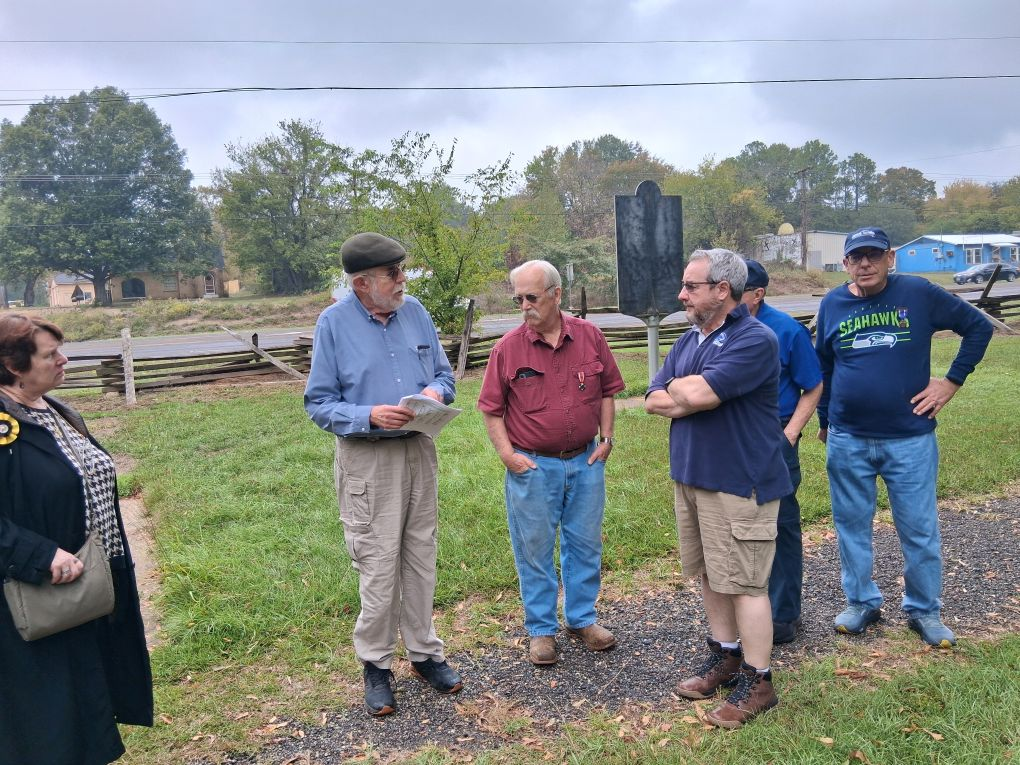
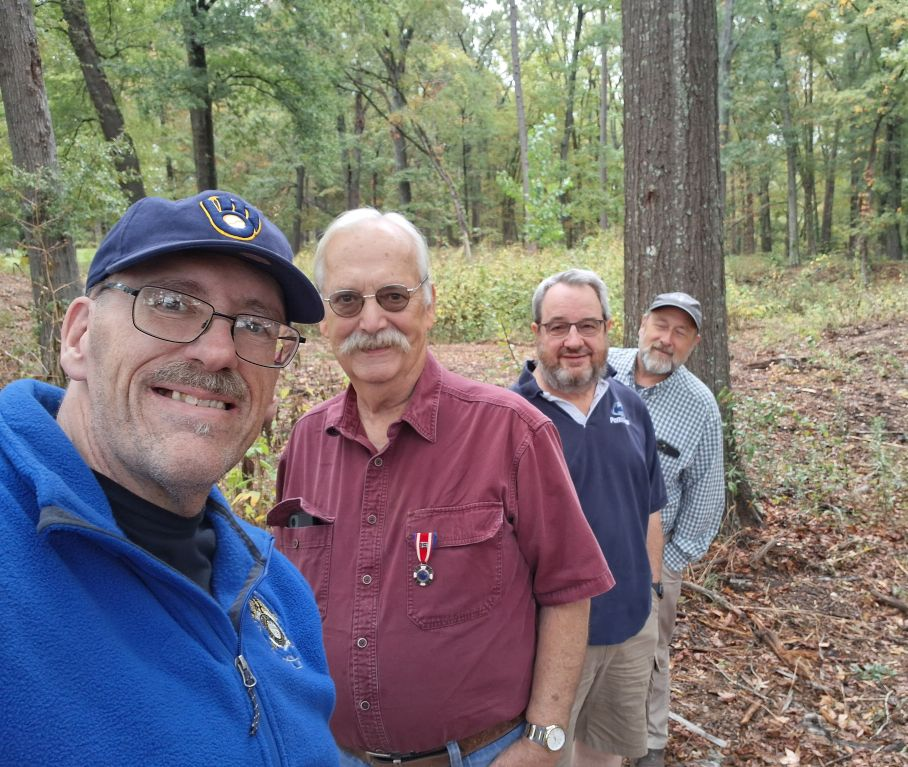
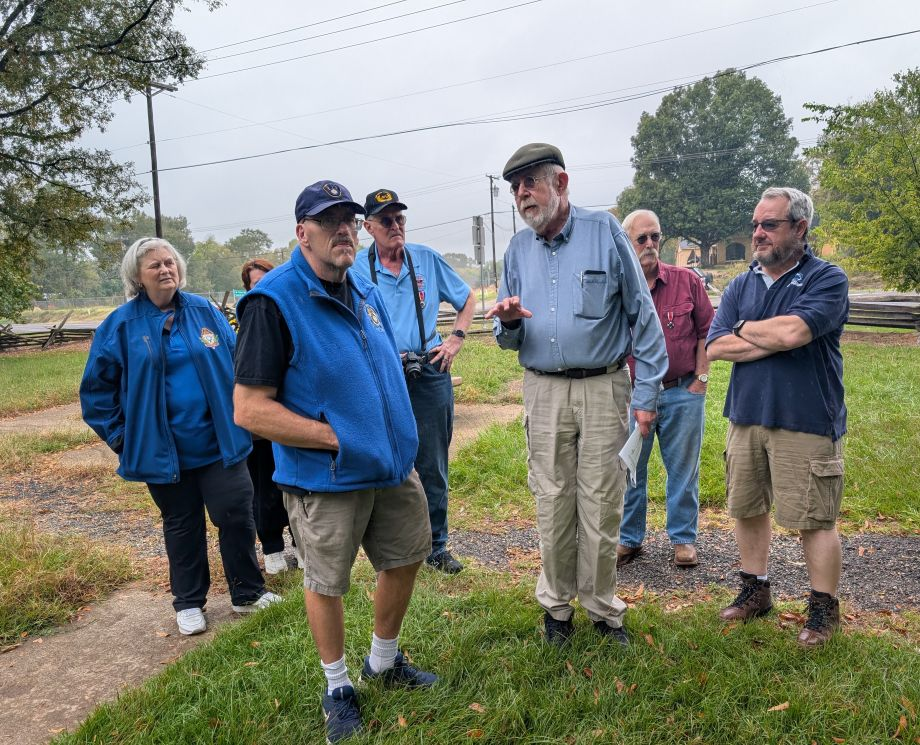
On October 31, 2026, Brothers George Hansen (PDC) and Don Gates (PDC) organized a tour of Camp Ford, a historic Civil War prison camp in Tyler, Texas. The day began with a delicious luncheon at Petty’s Steak and Fish in Lindale, followed by a presentation at the Smith County Historical Society by author and historian Randall Gilbert, an authority on Camp Ford who has performed over 40 years of research dating back to 1985. The afternoon concluded with a visit to Camp Ford Historical Park, where approximately 4,700 Union troops were imprisoned during the Civil War.
Attendees included brothers from Camps 1, 2, and 18 in Dallas, Houston, and Fort Worth, respectively; sisters Jill Schneider and Lisa Riley of Sara Emma Seelye Auxiliary #1; and ASUVCW National Patriotic Instructor Colleen Swafford.
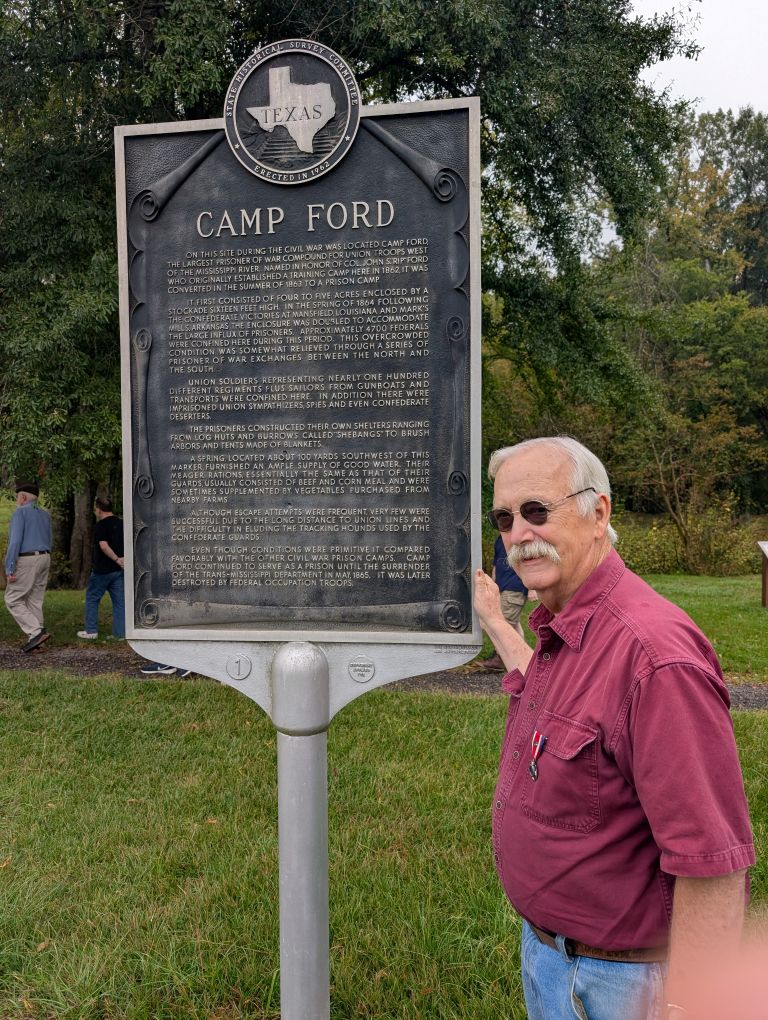
From the Texas Historical Commission marker at Camp Ford:
On this site during the Civil War was located Camp Ford, the largest prisoner of war compound for Union troops west of the Mississippi River. Named in honor of Col. John S. “Rip” Ford who originally established a training camp here in 1862. It was converted in the summer of 1863 to a prison camp.
It first consisted of four to five acres enclosed by a stockade sixteen feet high. In the spring of 1864 following the Confederate victories at Mansfield, Louisiana and Mark’s Mills, Arkansas, the enclosure was doubled to accommodate the large influx of prisoners. Approximately 4700 Federals were confined here during this period. This overcrowded condition was somewhat relieved through a series of prisoner of war exchanges between the North and the South.
Union soldiers representing nearly one hundred different regiments plus sailors from gunboats and transports were confined here. In addition there were imprisoned Union sympathizers, spies and even Confederate deserters.
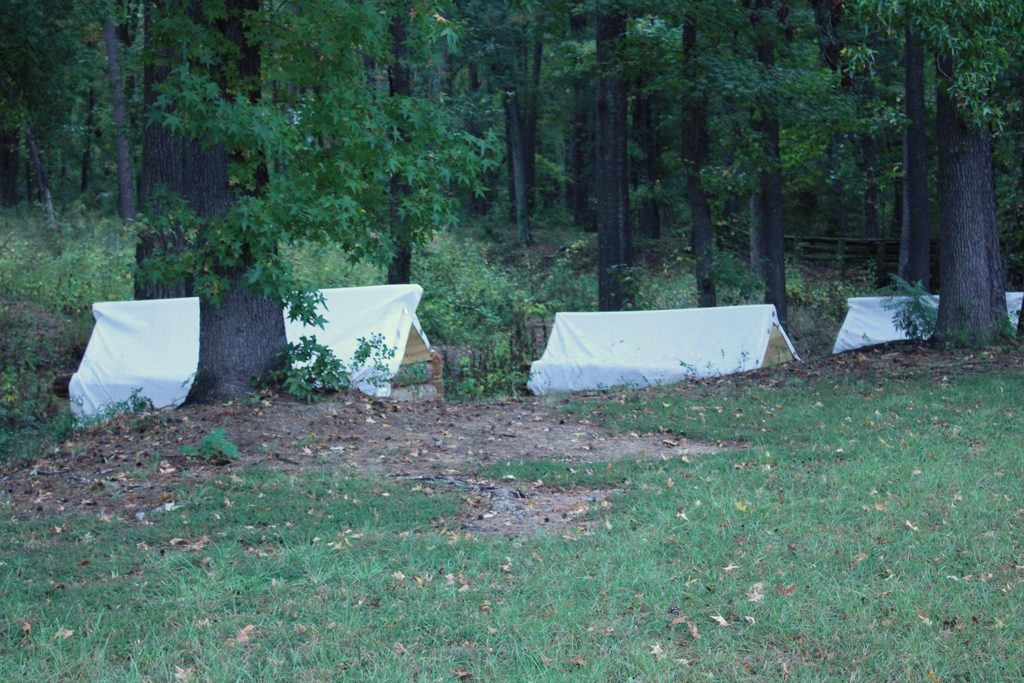
The prisoners constructed their own shelters ranging from log huts and burrows called “shebangs” to brush arbors and tents made of blankets.
A spring, located about 100 yards southwest of this marker, furnished an ample supply of good water. Their meager rations, essentially the same as that of their guards, usually consisted of beef and corn meal and were sometimes supplemented by vegetables purchased from nearby farms.
Although escape attempts were frequent, very few were successful due to the long distance to Union lines and the difficulty in eluding the tracking hounds used by the Confederate guards.
Even though conditions were primitive it compared favorably with the other Civil War prison camps. Camp Ford continued to serve as a prison until the surrender of the Trans-Mississippi Department in May, 1865. It was later destroyed by Federal occupation troops.

FRATERNITY – CHARITY – LOYALTY


Leave a Reply